
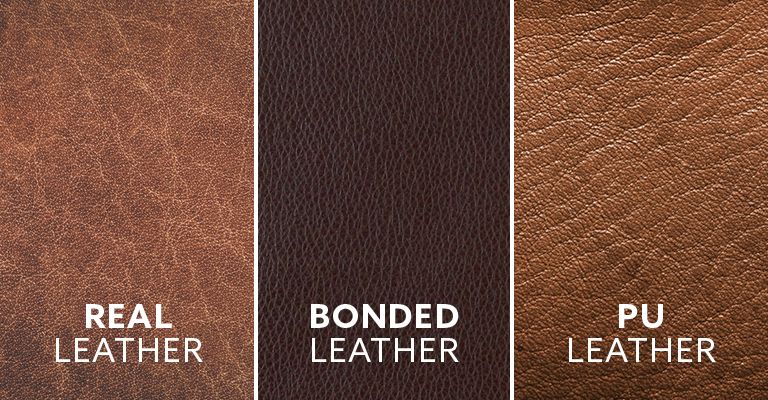
6 Differences Between Real vs. Bonded vs. Faux Leather
Affiliate Disclaimer: We independently review everything we recommend. When you buy through our links, we may earn a commission.
If you have ever been shopping for leather products, such as ergonomic office chairs or clothing, you may have noticed the variety of leathers you can choose from. Sometimes it can be hard to tell the differences between these leathers, or know what each type of leather is. Leather can range from real, to a real and artificial mix, to artificial.
There are three main types of leather you may stumble upon when shopping for leather products: real, bonded, and faux. Knowing the differences between these three leather types will help you decide which is best for you.
Full Disclaimer: We are an office furniture dealer and sell some of the stand up desks we review. To learn more about the products we sell, our review process and why you can trust us, please visit: Why we’re different. Who is BTOD.com and The Breakroom Blog?
What is Real Leather, Bonded Leather and Faux Leather?
Real Leather
Real leather can also be known as full grain leather, which is going to be the highest grade of leather you can find. Full grain leather is the top layer of the animal hide that has natural imperfections. Because of its thickness, real leather can be hard for manufacturers to work with but will be the most durable.
Bonded Leather
Bonded leather is made from the scraps and fibers leftover from manufacturing genuine leather, mixed with a polyurethane binder. These scraps are then rolled together using adhesives to bind the fibers together, onto a paper backing. A polyurethane coating may be added and embossed to create the texture of real leather. Most bonded leather only contains 10 to 20 percent real leather.
Faux Leather
Faux leather is also known as polyurethane leather, or PU leather. It is an artificial leather made of thermoplastic polymer. One hundred percent PU leather will be completely vegan, unlike some types of faux leather, called bicast leather, that have actual leather. Bicast leather takes the fibrous part of cowhide leftover from manufacturing real leather and adds a layer of polyurethane on top.
Differences Between Real, Bonded, and Faux
With the numerous types of leathers on the market, it can be challenging to tell the difference between them when shopping for leather products. Depending on the type of leather you are looking for, or what qualities you seek in your leather products, you will need to know their differences.
1. Cost Differences
The cost will be one of the main differences when comparing these three types of leather. Real leather is going to be the most expensive because it is made up of real leather that is hard to manufacture.
Faux leather is cheaper than real leather, but will cost a little more than bonded leather. Faux leather is easier to manufacture compared to real leather.
Bonded leather is the cheapest of all leathers because it’s the thinnest, made up of scrap leather and adhered to a thin paper backing.
2. Durability Differences
Real leather is going to have great durability over time because it won’t crack or peel. Instead of wearing out, real leather will develop a patina on its natural surface.
Faux leather, or PU leather, is not going to be as durable as real leather, but it will be more durable compared to bonded leather. PU leather isn’t breathable and it can easily puncture and crack over time.
PU leather can be resistant to stains and is fade resistant, unlike bonded leather. Because bonded leather is made of scrap leather and polyurethane mixed, and adhered to a paper backing, it is much like paper and can easily scratch, peel, or flake off over time. Bonded leather has a short lifespan and the color can fade in the sunlight.
3. Appearances & Texture Differences
Real leather will have the most natural appearance, though it is limited in color options and will have an inconsistent texture. Real leather has a smooth, soft texture unlike artificial leathers.
PU leather has a consistent texture in appearance, though it can sometimes look fake and synthetic. PU leather will be the closest in appearance to real leather and may even look and feel like real leather in some instances.
Bonded leather will be easiest to spot because it will look the most synthetic and is thinner than most faux and real leathers. Bonded leather and PU leather can come in various colors and styles, while genuine leather does not.
4. Sustainability Differences
Real leather can be a turn off to some consumers since it is not a vegan material. Real leather tends to be difficult to manufacture and costs more to make. PU leather may use fewer resources to produce, but the plastics do not decompose and aren’t eco-friendly.
However, if you are looking for a vegan leather, 100 percent PU leather is a great option. Bonded leather could be considered sustainable because it uses the scraps and fibers leftover from making real leather, but over time, it can release some of the chemicals used during the manufacturing process.
Bonded leather is not a vegan product because it can contain between 10 to 20 percent real leather.
5. Care & Cleaning Differences
Because it is naturally absorbent, real leather can easily absorb liquid, which can make it susceptible to staining and difficult to clean. Real leather will need to be treated twice a year to keep it soft and prevent it from drying out.
Stay away from abrasive cleaners when caring for real leather. PU leather is going to be the easiest to clean because it doesn’t absorb liquids. With proper care of your PU leather, you will get longer use out it. Bonded leather is going to be difficult to clean.
Bonded leather cannot be cleaned with any abrasive cleaners or cloths because the surface can wear away, crack, and peel.
6. Smell Differences
Although smell is subjective, many people don’t like the smell of artificial leathers. PU leather will have a distinct smell of either plastic or chemicals.
Bonded leather on the other hand can also have an artificial smell, but with its added leather, may smell more like real leather. Real leather will have a natural smell that will not smell artificial.
Overall Thoughts
When comparing these three different types of leather, it is really going to come down to personal preference. Real leather is going to be the best option, as long as you aren’t looking for a vegan product.
If you’re looking for a vegan leather option, PU/faux leather is the best option because it will last longer than bonded leather. PU leather is also cheaper than real leather, but it may not last long-term.
Bonded leather is the cheapest of the three options and may be something you want to avoid if your main concern is durability. If you are shopping for leather furniture or clothing, make sure you consider the multiple differences between the different types of leathers. Find out which qualities of leather are the most important to you.
Source: btod.com
Source reference: www.btod.com.
Read more in Furniture News.
