

5 Most Stable Standing Desks We’ve Tested






Affiliate Disclaimer: We independently review everything we recommend. When you buy through our links, we may earn a commission.
Understanding the stability of a standing desk can be a difficult task. The biggest reason for this is because stability is one of the most subjective things about standing desks. After talking with our OEM K&A Mfg., it became obvious we needed to create a machine that could accurately and objectively measure a standing desk frame’s deflection. With this machine we would be able to easily compare two or more standing desks stability.
This post shows the results for the top 5 most stable standing desks we have tested on the WobbleMeter to date. If you’d like to see the results of all the standing desks we’ve tested, please visit the complete WobbleMeter Results page. For our full review of the top-rated desk, see our NewHeights XT WobbleMeter test.
Full Disclaimer: We are an office furniture dealer and sell some of the products we review. To learn more about the products we sell, our review process and why you can trust us, please visit: Why we’re different. Who is BTOD.com and The Breakroom Blog?
What Is the WobbleMeter?
If you’ve never had the chance to read our WobbleMeter posts, you’re probably wondering what it is. In short, The WobbleMeter was designed to provide an objective method of measuring a standing desk’s wobble and rocking motions. To learn more, visit our Using the WobbleMeter for Standardized Stability Testing post.
WobbleMeter Score Range Guide
For 30″, 42″ and 46″ Height Testing
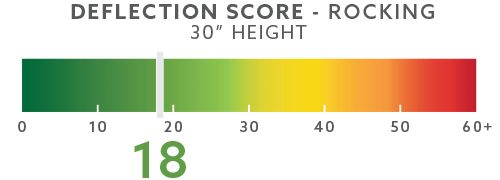
- 0-20 = Excellent Stability. Almost all desks tested at sitting height will score between 0-20. Users in this range will not notice motion.
- 21-30 = Very Good to Good Stability. Most users will not notice the small amount of motion in this range.
- 31-40 = Good to Fair Stability. Some users may begin to notice motion, especially closer to 40.
- 41-50 = Fair to Bad Stability. Most users will notice motion, especially closer to 50.
- 51-60+ = Very Bad Stability. All users will notice motion, especially above 60.
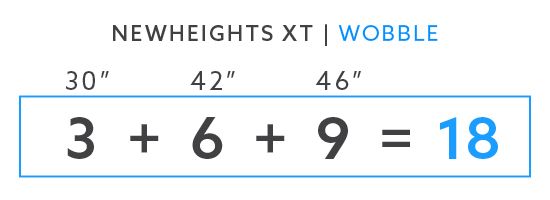
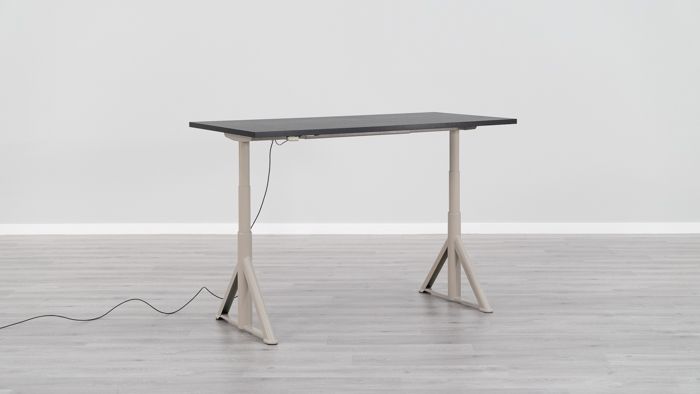
1. NewHeights XT – Overall Score 82
Elegante XT Price: Starting at $2,015.99 | Buy at BTOD.com | See Full NewHeights XT WobbleMeter Results
WobbleMeter Results
The NewHeights XT is the most stable standing desk we’ve tested on the WobbleMeter to date. Its wobble score was less than half the closest competitor for side-to-side wobble. It ranked second overall for front-to-back rocking tests.
2. IKEA Idasen – Overall Score 114
IKEA Idasen Price: Starting at $600.00 + Shipping | Buy at IKEA.com | See Full IKEA Idasen WobbleMeter Results
WobbleMeter Results
The IKEA Idasen is our second ranked overall for stability. It ranked fifth for left-to-right wobble testing, but was the most stable desk tested for front-to-back rocking motions.
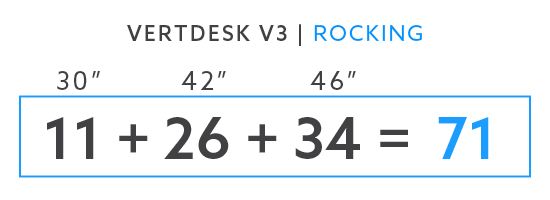
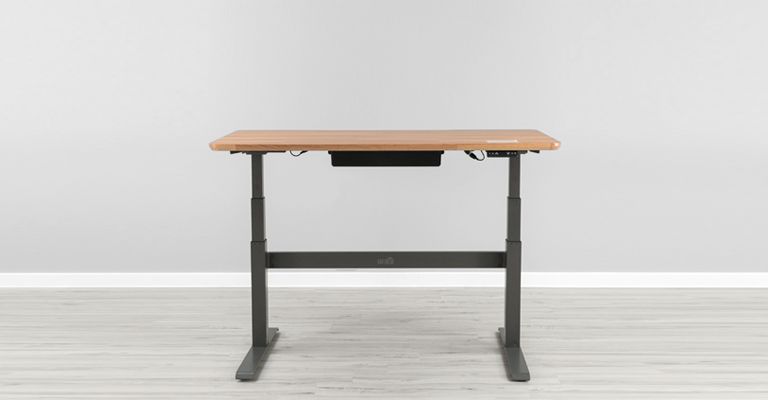
3. VertDesk v3 – Overall Score 116
VertDesk v3 Price: Starting at $818.99 | Buy at BTOD.com | See Full VertDesk v3 WobbleMeter Results
Stability Test Results
The third ranked desk is our VertDesk v3. It ranked third for wobble tests and fourth for rocking tests.
4. VARIDESK ProDesk 48 Electric – Overall Score 130
ProDesk 48 Price: Currently Unavailable | Buy at Amazon.com | See Full VARIDESK ProDesk 48 WobbleMeter Results
Stability Test Results
Fourth ranked is the VARIDESK ProDesk 48. Ranked fourth for wobble tests. Ranked third for rocking tests.
5. Uplift v2 Commercial – Overall Score 132
Uplift v2 Commercial Price: Starting at $608.00 | Buy at Amazon.com | See Full Uplift v2 Commercial WobbleMeter Results
Stability Test Results
Fifth ranked is the Uplift v2 Commercial. Tied with the VARIDESK ProDesk at 132, it ranked fifth for both wobble and rocking tests.
12 Things To Consider When Selecting A Stable Standing Desk
The suggestions below will not guarantee the new desk you select is stable. A standing desk will only be as stable as its weakest point. Even if you check six out of seven requirements, the seventh could prove to be a problem. Use this as a guideline for what to look for. For a deeper explanation of why these factors matter, see our guide to why standing desks wobble.
1. Traditional Cross Support
One of the most overlooked components of a standing desk is a traditional cross support system. When done correctly, the traditional cross support can significantly reduce lateral wobble on most frames.
2. Proper Cross Support Design
Not all cross supports were created equal. One of the biggest problems is with expandable cross supports – while this minimizes inventory, it opens the door for unnecessary movement. The cross support also needs to be tall enough to be effective and have a solid connection to the frame.
3. Permanent Frame Connections
The ultimate solution for stability is fewer moving parts. When the feet and upper supports are welded to the columns, it significantly reduces the chance for them to loosen over time.
4. Locking Washers and/or Loctite For Bolts
Most frames require users to attach the feet and upper supports to the columns with bolts. As a desk moves up and down over time, the bolts can start to back out on their own. We have only had a handful of brands include loctite and locking washers for these connections.
5. High Quality Glide Systems
Glide systems fill the gap between columns and reduce friction. The industry standard material is Delrin Acetal from Dupont. As glide systems wear down, the fit between each column will change – creating stability issues and binding that can trigger false positives in anti-collision safety functions.
6. Properly Fit Glide Systems
Having properly fit glides is almost as important as quality. When glides are too tight, binding issues are created. When they are too loose, stability issues occur. If a desk starts out with poorly fit glides, they also tend to wear unevenly.
7. Top and Bottom Glides Required
Standing desks without glides on both top and bottom of the column are a stability nightmare. Without both, there is no way to counteract the movement in the frame when rocked or wobbled.
8. Good Connection Between Top and Frame
We’ve found that some desks attempt to create easier assembly processes, which leave the top-to-frame connection with too much play. Products like the IKEA Bekant only use cheap plastic fasteners to connect their surface and frame – a major concern under load.
9. Quality Column Construction
Even if steel is used, the thickness is important to how much flexing can occur at standing heights. All aluminum extruded columns we’ve tested exhibit some amount of flexing due to the material’s properties.
10. Adequate Overlap within Columns
The amount of overlap left inside a column makes or breaks front-to-back stability at tall heights. When manufacturers maximize the height range, they often leave less column overlap inside the outer column – reducing the distance between glides and amplifying leverage from a top-heavy desk.
11. Good Connection From Foot and Adjustable Glide
How the foot glides attach to the foot is crucial to stability. The preferred methods are a threaded rivnut or a welded nut inside the foot. These options have proven to create a more secure connection than tapped steel, which may only allow two or three lines of threading.
12. Strong Foot Design
A standing desk will only be as stable as the feet it’s built on. Formed steel and molded aluminum have proven to be the best solutions for a stable foot design.
Bottom Line
All of the desks on our most stable list show some signs of motion – the difference is these brands have done the best job minimizing this motion through mid to tall heights.
Without a direct focus on stability in design, you get a pretty good idea how hard it is for standing desks to be truly stable at standing height. See our complete standing desk buyer’s guide for full rankings.
Source: btod.com
