

12 Reasons To Avoid Cheap Electric Standing Desks Under $400



Affiliate Disclaimer: We independently review everything we recommend. When you buy through our links, we may earn a commission.
I get it: everyone is always looking for that next great deal. Electric standing desks aren’t immune to this problem. As the market has continued to mature, so have the number of options.
Products entering the category with the sole purpose of offering the lowest price create real problems. No matter how hard you look, products under $400 will share a good majority of the 12 problems mentioned in this post.
Full Disclaimer: We are an office furniture dealer and sell some of the products we review. To learn more about the products we sell, our review process and why you can trust us, please visit: Why we’re different. Who is BTOD.com and The Breakroom Blog?
Why Was $400 The Breaking Point?
Over the last year I have had the opportunity to review more than 40 electric standing desks ranging from $300 to $1,700. The review process was always the same: assembling each desk, testing how they function, and then tearing each desk apart to learn the inner workings. What I started to realize: the closer I got to $400 the more these problems became the norm versus the exception.
Should You Really Care?
This depends on how you view your next standing desk purchase. Are you looking for a long-term investment that will be with you for more than five years? Or are you looking for a quick fix to get you standing? Some desks around $400 could make it to five years and a few are even warranted to that point. I would stick with brands that at minimum provide a warranty of three to five years. Products with one or two year warranties should be avoided at all costs. While you could save 20 to 50 percent upfront, there is a high likelihood you’ll be looking to replace it within the next year.
1. Unstable at Standing Height
Stability is a real issue that you must consider. I have yet to find a single desk under $400 that is stable at standing height. Small issues with a loose foot or upper support bracket can change stability significantly. Bigger problems with poorly fit glides, lack of a traditional cross support, or cheap metal components all play a big part. Low cost providers have one objective: keep the price down at all cost. Making a standing desk stable isn’t a cheap endeavor. See our most stable standing desks ranking for what stability looks like when engineered properly.
2. Low Quality Electronics
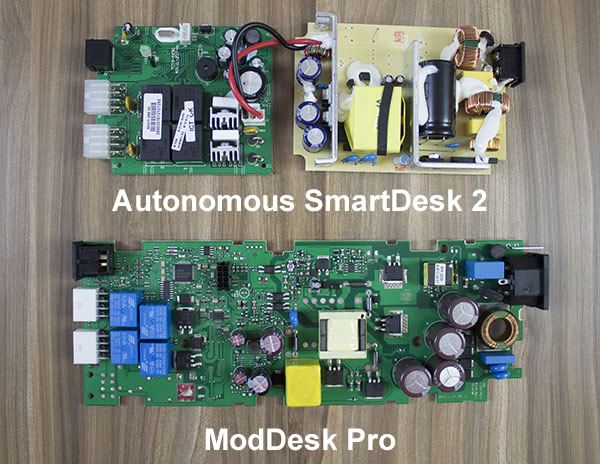
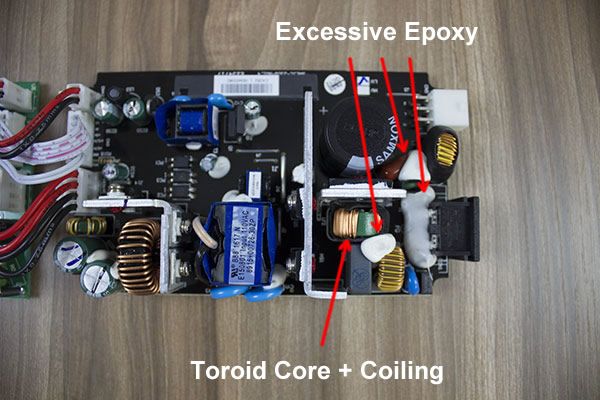
When comparing a desk under $400 to a more expensive alternative, the first place to look is inside the control box. Cheap standing desks share these common characteristics: two-board systems using mass-produced Chinese boards for multiple products; large components requiring excessive caulk to hold them in place; cheap plastic connectors linking the boards together that tend to be loose; and poorly wrapped toroid cores that should be evenly spaced and consistent to function properly.
3. Cheap Glide Systems
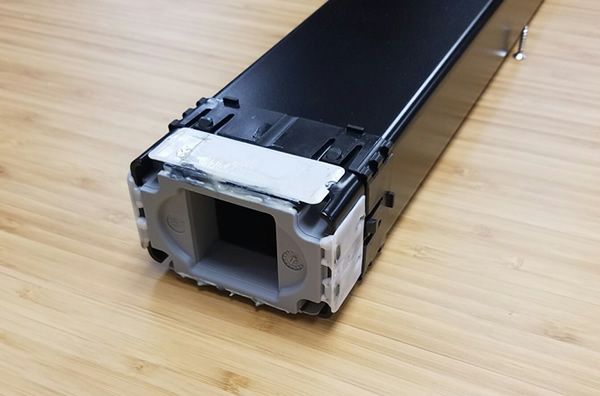
Inside all columns you’ll find glide systems – small pieces of plastic that create a snug fit between columns and act as natural lubricant as the desk adjusts. Low quality glides have two problems: stability gets progressively worse as the glides wear down and play between columns increases; and uneven wear creates binding that triggers false positives in anti-collision safety functions.
The industry standard material for quality glides is Delrin Acetal from Dupont – best known for holding up well over high cycle counts.
4. Poorly Married Columns
If the columns are not properly married together, you’ll notice play in the columns right away. While this might not create a problem at sitting height, by the time you are at a standing position it will be an issue. Poorly married columns tend to be a problem for the absolute cheapest products – companies like Sinolinear (which manufactures the 103E frame for VIVO) are examples where inexperience showed through. You could feel the columns moving when the desk was rocked and wobbled.
5. Excessive Lubrication
After assembling a new desk, we do a few cycles up and down to ensure everything is working properly. Some frames had shown lubricant on the columns before we even cycled them once. Others only required a few cycles to start showing clear or white grease throughout the column. When we open the columns during review, inside the frame you’ll find a substantial amount of grease – so excessive there is no way to wipe down the frame and keep it clean.
6. Bad Internal Gear Systems and Components
The internal gear system is what moves the desk up and down efficiently. Combined with the motor, this is a major load-bearing component. One of the biggest concerns after opening these low-cost desks is the amount of plastic used within the gear system – not just the fact that it was plastic, but the quality of the plastic and how much was used for load-bearing components. Some brands using the same OEM have widely varying weight capacities for the same frame, suggesting the advertised capacities are not reliable.
7. Inconsistent Motors
Inconsistent motors create odd whining sounds as the desk moves through height transitions. More critically, if you plan to load the desk with significant weight, we have seen desks with consistency issues that slow down significantly when loaded beyond 150-200 lbs. If the motor is being overworked, it could shorten its life expectancy.
8. Short Warranty Periods
If a manufacturer doesn’t have faith in their product, how can you? We have tested brands with warranties as short as one year. Even two-year warranties are suspect. I suggest at minimum considering a desk with a three to five year warranty. What happens after the warranty period is up? Will replacement parts be available? By the time you’re done replacing broken components, you could end up spending more than if you had paid extra for a quality desk upfront. See our standing desk rankings for desks with strong warranty coverage.
9. Inconsistent Paint Finish and Welds
Some brands we’ve tested under $400 have shown serious issues with paint consistency and welds. This is directly linked to quality control. Depending how much you care about aesthetics, this could be a dealbreaker.
10. Small Lifting Capacity
Small lifting capacity ratings are a common theme for desks under $400. Any time we see a desk rated at or below 200 lbs. it is almost always underpowered. While some desks can lift more than their advertised capacity, there will likely be a big drop-off in performance. If you plan to use a heavy solid wood surface or heavy components, this should be a concern. Exceeding a manufacturer’s weight capacity voids most warranties.
11. Slow Adjustment Speed
Three of the last electric standing desks I tested under $400 averaged close to .8″ per second – among the slowest speeds tested. When slow adjustment speed is combined with small lifting capacity, it is a major concern for quality. The desks with this combination have been among the worst I have personally tested.
12. Lack of Quality Control
The last problem is a culmination of all the others. Paint inconsistencies, poor welds, and significant amounts of lubrication on the columns appear to be among the easiest problems to fix – yet low-cost brands consistently let these frames ship with clear quality misses. It tells me that volume out the door matters more than what is being shipped. This has even been a problem for some desks we’ve tested at upwards of $500.
Additional Standing Desk Resources
Bottom Line
After testing as many electric standing desks as I have, the difference in quality became very clear. You don’t have to spend $1,500 to get a high quality standing desk – there are strong options under $1,000. If this standing desk is an investment and you plan to use it for years to come, I suggest spending a little more money. At the end of the day you will be glad you did. See our complete electric standing desk rankings for the best options at each price point.
Source: btod.com
